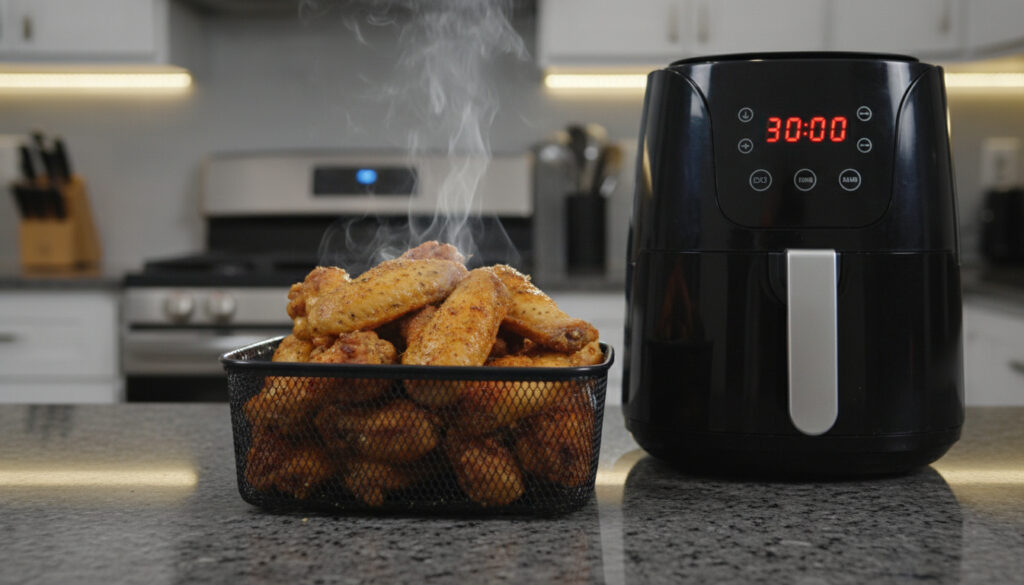
Chicken Wings in Air Fryer – Crispy in 20-35 Minutes
Crispy chicken wings in an air fryer deliver restaurant-quality texture without submerging food in oil. The circulating hot air renders fat from the skin while creating a shatteringly crisp exterior, producing results that rival deep-frying with significantly less fat.
Home cooks increasingly favor this method for weeknight dinners and game-day spreads. Whether starting with fresh drumettes or frozen bags from the freezer, the appliance accommodates various preparations efficiently, though specific timing adjustments prove essential for optimal results.
Success depends on managing moisture, maintaining proper spacing, and verifying internal temperatures reach safe levels.
How Long and at What Temperature to Cook Chicken Wings in an Air Fryer?
Standard preparations cook at 400°F for 20-35 minutes total, with flipping at the halfway mark. Larger wings require 5-10 additional minutes, while breaded or frozen varieties need modified approaches to prevent burning or sogginess.
Key Insights for Timing and Temperature
- Always verify internal temperature reaches 165°F using a meat thermometer to ensure food safety.
- Preheat air fryers to 400°F for 2-5 minutes before loading to establish consistent heat distribution.
- Single-layer placement prevents steam buildup that softens skin and inhibits browning.
- Frozen breaded wings specifically benefit from starting at 380°F rather than maximum heat.
- Thawed fresh wings cook faster (18-24 minutes) compared to frozen (30-35 minutes).
- Baking powder (1 tsp per pound) accelerates browning without adding oil.
Wing Type Reference Table
| Wing Type | Preheat | Cook Temp/Time | Total Time | Internal Temp |
|---|---|---|---|---|
| Frozen Raw (Basic) | 400°F (optional) | 400°F / 20-35 min (flip at 15) | 20-35 min | 165°F |
| Frozen Raw (Two-Stage) | 400°F | 400°F / 8-10 min thaw, then 400-430°F / 10-12 min | 18-22 min | 165°F |
| Frozen Breaded/Pre-cooked | 400°F / 2-5 min | 380-400°F / 30-35 min (flip/spray at 15) | 30-35 min | 165°F |
| Thawed Fresh (Standard) | 400°F / 2 min | 400°F / 18-24 min (flip midway) | 18-24 min | 165°F |
| Thawed Fresh (High Heat) | 400°F | 400°F / 14-18 min, then 430°F / 4-6 min | 18-24 min | 165°F |
| Breaded Coated | 380°F | 380°F / 25-30 min (flip/spray at 12-15) | 25-30 min | 160-165°F |
How to Get Crispy Chicken Wings in the Air Fryer
Domestic Superhero emphasizes that moisture management determines texture outcomes. Overcrowding remains the primary culprit behind soggy results; air fryers require adequate circulation between pieces. Stacking wings creates steam pockets that soften the skin, while single-layer placement allows hot air to dehydrate the surface quickly.
Avoiding Common Texture Pitfalls
Pat thawed wings completely dry with paper towels before seasoning. Research from Wholesome Yum confirms that surface water inhibits the Maillard reaction responsible for golden-brown crispness. Separate full wings into drums and flats for uniform cooking times, as connected pieces cook unevenly.
Frozen wings release significant moisture during initial cooking phases. I Heart Umami recommends a preliminary 8-10 minute cook at 400°F specifically to thaw and allow liquid drainage, followed by patting dry before final seasoning and crisping.
Advanced Crisping Techniques
Baking powder alters the skin’s pH balance, accelerating browning without adding bitterness. Apply 1 teaspoon per pound of wings along with salt. A light spray of avocado or olive oil mid-cook fuses breading and enhances golden coloration. For extra crunch, increase temperature to 430°F during the final 4-6 minutes.
Lightly coat wings with baking powder (1 tsp per lb) before air frying. This raises the pH level and creates micro-bubbles in the skin during cooking, resulting in exceptional crunch without the metallic taste associated with larger quantities.
Best Ways to Season and Prep Chicken Wings for Air Frying
Dry rubs adhere best when applied to dry surfaces. Combine garlic powder, onion powder, paprika, salt, and pepper—using approximately 1 teaspoon each per 2 pounds of wings. Health Starts in the Kitchen recommends coating generously in cornstarch, flour, and seasoned salt before cooking for breaded versions.
Building Flavor Foundations
Apply seasonings after partial thaw for frozen wings to avoid soggy, diluted coatings. For breaded preparations, the cornstarch-flour mixture creates a crispy shell that withstands air frying better than wet batters. Spray lightly with oil after flipping to set the breading.
Sauce Application Timing
Sauces burn during extended high-heat cooking due to sugar content. Toss wings in buffalo, honey garlic, honey sriracha, or honey buffalo after the initial cook cycle, then return to the air fryer for 1-2 minutes at 400°F to caramelize the exterior without charring. Serve with yogurt ranch blends combining Kewpie mayo, Greek yogurt, milk, soy sauce, and pepper.
Cooking Frozen or Breaded Chicken Wings in an Air Fryer
Air Fryer World documents significant timing differences between frozen and fresh preparations. Frozen wings require modified approaches to prevent ice crystals from steaming the skin rather than crisping it.
From Freezer to Crispy
Begin frozen wings with a pre-cook phase at 400°F for 8-10 minutes to thaw and release excess moisture, then pat dry and season. Resume cooking at 400-430°F for 10-12 minutes. Everyday Family Cooking notes that frozen pre-cooked or breaded varieties specifically benefit from starting at 380°F for 15 minutes, flipping, then finishing at higher heat.
Managing Coating and Breading
Breaded preparations add 50-100 calories per serving compared to naked wings. Coat thawed wings in cornstarch mixed with flour and seasonings, then air fry at 380°F for 25-30 minutes, flipping and spraying lightly with oil at the 12-15 minute mark.
Always verify frozen wings reach 165°F internal temperature. Breaded varieties may appear golden before fully cooked through; insert a meat thermometer into the thickest part of the drumette to confirm doneness.
Standard 5-6 quart air fryers accommodate 1-2 pounds of wings per batch (approximately 8-12 pieces). Cooking more than this quantity simultaneously prevents proper air circulation and yields uneven results.
Step-by-Step Air Fryer Chicken Wings Timeline
- Preheat air fryer to 400°F for 2-5 minutes.
- Pat wings completely dry using paper towels (5 minutes).
- Season with dry rub or baking powder mixture (5 minutes).
- Arrange in single layer without overlapping.
- Air fry at 400°F for 10-15 minutes.
- Flip wings and spray lightly with avocado or olive oil.
- Continue cooking 10-15 minutes until 165°F internal temperature.
- Toss in sauce and air fry 1-2 minutes to caramelize (optional).
Crispy Wings Guaranteed: What Works vs Myths
Established Techniques
- Patting wings dry removes surface moisture that inhibits crisping.
- Single-layer placement ensures even heat distribution.
- 165°F internal temperature guarantees food safety.
- Baking powder scientifically alters skin pH for better browning.
- Flipping at halfway prevents uneven cooking.
Uncertain Variables
- Exact cooking times vary significantly between air fryer models and wing sizes; visual cues and thermometer readings prove more reliable than strict timing.
- Whether preheating is strictly necessary remains debated, though most recipes recommend it for consistent results.
- Optimal oil spray timing (before, during, or after flipping) varies by recipe with no clear consensus on maximum efficacy.
Why Air Fryer Wings Beat Oven or Deep Fry
Air fryer technology circulates superheated air at high velocities, creating a convection environment more intense than standard ovens. This rapid air movement dehydrates the wing skin surface quickly, producing the Maillard reaction responsible for golden-brown crispness without submerging food in oil.
Compared to deep frying, the method reduces fat content significantly while eliminating the mess and safety hazards of handling large quantities of hot oil. Cleanup involves only the air fryer basket rather than oil disposal and splatter management. Basket-style models generally outperform oven-style units for wing crisping due to concentrated airflow patterns.
Expert Tips and Sources
Pat thawed wings completely dry before seasoning. Single layer only, no overlapping; cook in batches for even air flow. Light oil spray mid-cook fuses breading and skin.
— Everyday Family Cooking
For breaded frozen wings, partial defrost first prevents sogginess. Drain any liquid released during initial cooking before applying final seasonings.
— I Heart Umami
Mastering the Perfect Batch
Crispy air fryer chicken wings require attention to moisture management, temperature control, and proper spacing. Whether preparing Crispiest Air Fryer Chicken Wings Recipe or experimenting with Air Fryer Chicken Wings Super Crispy methods, the fundamental principles remain consistent: dry surfaces, high heat, and adequate air circulation produce superior results compared to conventional oven roasting or deep frying.
Frequently Asked Questions
What is the best air fryer for chicken wings?
Basket-style models with 5-6 quart capacity suit most home cooks, while 7-8 quart versions better accommodate larger batches or party quantities.
How many chicken wings fit in an air fryer?
Standard models hold 1-2 pounds (8-12 wings) in a single layer without overlapping. Exceeding this quantity forces steaming rather than crisping.
Can you sauce wings before air frying?
Applying sauce before cooking causes burning due to sugar content. Always sauce after the initial cook cycle, using brief final minutes to set the glaze.
Why are my air fryer wings tough?
Overcooking dehydrates meat; check temperature at minimum time recommendations. Toughness also results from cooking frozen wings without adjusting time allowances.
Do I need oil for air fryer wings?
While not strictly necessary, a light spray of avocado or olive oil mid-cook improves browning and helps seasonings adhere, particularly for breaded varieties.
How do I reheat leftover wings?
Refrigerate up to 3-4 days, then air fry at 350-400°F for 2-6 minutes until crispy and heated through to 165°F.
More related posts
 TV Shows with Harlan Coben: Netflix List & Order
 Groundhog Phil: Facts, 2026 Prediction, and History
 Yuri Gagarin: First Human in Space and His Death Mystery
 2026 FIFA World Cup: Hosts, Dates, Qualifiers & Schedule
 Canadian Premier League Standings 2026: Live CPL Table
 Tammy Slaton Weight Loss and Husband Death Update
 Corey Hart: Biography, Career Hiatus, and 2024 Comeback
 Home Decorating Rules: 3-5-7, 70/30, 2-Foot & 3 Color Guide
